NIR Stacked Frame
Metadata
Data product name |
DpdNirStackedFrame |
Data product custodian |
NIR |
Name of the Schema file |
|
Last Edited for DPDD Version |
1.1 |
Processing Element(s) creating/using the data product |
Creators:
The DpdNirStackedFrame data product components are created by different tasks during the execution of the NIR_ProcessField_Pipeline:
project * The PSF model and image are created by the NIR_PSFModelling task of the NIR_PointSpreadFunction project * The data product xml is written by the final NIR_ProcessField_Pipeline step that is NIR_CreateScientificDpds of NIR_Utilities project Consumers:
Into the NIR_ProcessField_Pipeline the MEF file is used as input for the NIR_CatalogExtraction PE to create the NIR Stacked Frame Catalog containing source extracted. |
Processing function using the data product |
Indicate here the PF you are aware of using the product. Can be the custodian PF itself for internal product. Can also be Science Working Group for final products. The list does not need to be exhaustive. This is one of the output of the NIR_ProcessField_Pipeline. In the pipeline the MEF file is used as input for the NIR_CatalogExtraction PE to create the NIR Stacked Frame Catalog with source extracted.
|
Proposed for inclusion in EAS/SAS |
This product is proposed for inclusion in the SAS: yes |
Data Product Elements
Header |
object of type sys:genericHeader |
Data |
object of type nir:nirStackedFrame |
QualityFlags |
object of type dqc:sqfPlaceHolder |
Parameters |
object of type ppr:genericKeyValueParameters |
Detailed Description of the Data Product
The DpdNirStackedFrame is one of the output of the NIR_ProcessField_Pipeline applied to wide survey observations and in general to “scientific” pointings (i.e. Self Calibration).
It is the result of the stacking process of a set of input images, 4 in case of wide, the nominal survey strategy. It could be created also in some specific cases with more exposures. A single stacked image is provided at the end of each NIR_ProcessField_Pipeline run.
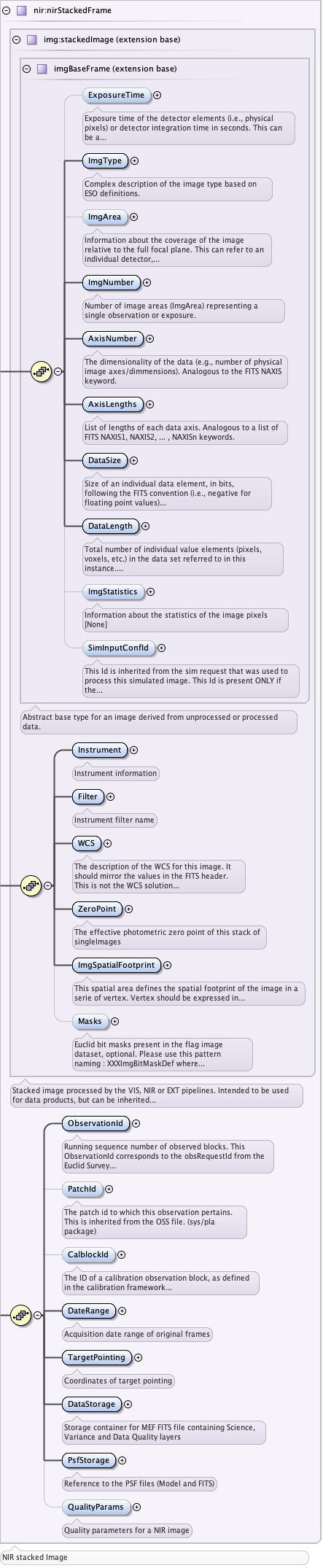
Fig. 25 : Graphical representaton of Data section structure for DpdNirStackedFrame
The main elements inside the Data section are:
Filter: The filter name (e.g. NIR_Y, NIR_J, NIR_H)
WCS: The description of the WCS for the image. This field mirrors values in the FITS header
ZeroPoint: The effective photometric zero point of this stack of single images
ImgSpatialFootprint: This spatial area defines the spatial footprint of the image in a series of vertex
ObservationId: Image Observation Id
TargetPointing: Coordinates of target pointing
DataStorage: FITS file name containing the Stacked image FITS file
PsfStorage: Reference to the PSF files (Model and FITS)
- QualityParams (optional):Data Quality Parameters
Min: Minimum image pixel value
Max: Maximum image pixel value
Mean: Average image level (mean of all image pixel values)
Median: Median image level (median of all image pixel values)
StDev: Sample standard deviation of the image pixel values
MaskedPixelFraction: The fraction of masked pixels
The DpdNirStackedFrame data product contains the link to 3 files:
a MEF file with the science image
a PSF model measured from science frames
a PSF image of the model
Scientific image FITS file
The main result of the stacking process is a MEF file stored into the DpdNirStackedFrame in the Data.DataStorage field.
The file is composed by four layers:
Layer name |
Data Format |
Units |
Content |
|---|---|---|---|
PRIMARY |
Main headers |
||
SCI |
float32 |
microJy |
Scientific data |
RMS |
float32 |
microJy |
RMS data |
DQ |
int32 |
Data Quality mask |
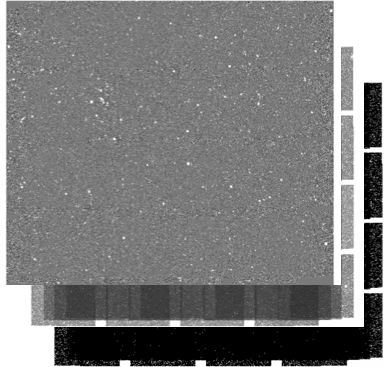
Fig. 26 : Graphical representation of 3-layer structure of NIR stacked frames
Primary layer
The primary layer is an header dedicated to store global infomation on pointings and parameters used by SWarp for resampling and stacking (i.e. starting from COMBINET, RESAMPT1 up to PSCALET2 in the next table) together with the inverse sensitivity value PHOTFNU needed to convert pixels in [microJy].
HDU PRIMARY: header |
|||
|---|---|---|---|
Name |
Description |
Value |
|
Keywords |
FITS_DEF |
FITS name definition |
string = nir.stackedImage |
FITS_VER |
FITS version |
string = 0.3 |
|
TELESCOP |
string = Euclid |
||
INSTRUME |
or NISPsim for simulations |
string = NISP |
|
VERSION |
Data Release version |
string |
|
DATE |
UT date when this file was created |
string |
|
IMG_CAT |
ImgType:Category DP category (SCIENCE, CALIB, …) |
string |
|
IMG_T1 |
ImgType:FirstType DP type (OBJ, SRD, DARK, …) |
string |
|
IMG_T2 |
ImgType:SecondType DP type (LAMP, SKY, …) |
string |
|
OBSMODE |
ImgType:ThirdType DP type (WIDE, DEEP, CALIBRATION) |
string |
|
OBSTYPE |
ImgType:Technique DP technique (IMAGE, SPECTROIMAGE) |
string |
|
OBS_ID |
eso:observationSequence:ObservationId Running Sequence number of the Observed block |
integer |
|
FILTER |
Filter name, e.g. NIR_J |
string |
|
DATE_STA |
DateRange:TimestampStart Observation Date first dither |
string |
|
DATE_END |
DateRange:TimestampEnd Observation Date last dither |
string |
|
RA |
TargetPointing:RA Center of field of view right ascension (deg) |
double |
|
DEC |
TargetPointing:DEC Center of field of view right declination (deg) |
double |
|
PA |
TargetPointing:Orientation Position angle (deg) |
double |
|
EQUINOX |
Standard FK5 (years), e.g. 2000. |
double |
|
RADESYS |
Coordinate reference frame, e.g. FK5 |
string |
|
EXPTIME |
ExposureTime Effective integration time in seconds, e.g. 60.0005 |
double |
|
COMBINET |
COMBINE_TYPE config parameter for SWarp |
string |
|
RESAMPT1 |
RESAMPLING_TYPE config parameter |
string |
|
CENTERT1 |
CENTER_TYPE config parameter |
string |
|
PSCALET1 |
PIXELSCALE_TYPE config parameter |
string |
|
RESAMPT2 |
RESAMPLING_TYPE config parameter |
string |
|
CENTERT2 |
CENTER_TYPE config parameter |
string |
|
PSCALET2 |
PIXELSCALE_TYPE config parameter |
string |
|
CAL_VER |
version of calibration factors |
double |
|
WAVE_CAL |
wavelength used for calibration microns |
double |
|
WAVELEN |
central wavelength of bandpass microns |
double |
|
WAVEHPBW |
half power bandwidth microns |
double |
|
PHOTFNU |
inverse sensitivity Jy s / e |
double |
|
PHOTFNUE |
error in PHOTNU Jy s / e |
double |
|
Scientific Layer
The scientific layer, named SCI, stores the data obtained combining togheter all images used as input to the NIR Pipeline.
The header contains some basic image definition keywords together with the GAIN and the SATURATE keywords derived by SWarp for resampling and stacking.
HDU DETn.SCI: header |
|||
|---|---|---|---|
Name |
Description |
Value |
|
Keywords |
EXTNAME |
e.g. DET11.SCI, meaning Detector number 0, Science data |
string |
DET_ID |
Detector:DetectorId e.g. Detector ID, e.g. 11 |
string |
|
BITPIX |
array data type |
integer |
|
NAXIS |
e.g. number of array dimensions |
integer |
|
NAXIS1 |
e.g. pixel numbers on first axis |
integer |
|
NAXIS2 |
e.g. pixel numbers on second axis |
integer |
|
BUNIT |
physical units of the array values |
string |
|
RPIX_PRC |
Reference Pixel processing mode (0=no_px_correction,1=horiz_px_correction,2=vertical_px_correction) |
integer |
|
GAIN |
Detector:Gain e- to ADU conversion factor, e.g. 1.5 |
double |
|
EQUINOX |
Standard FK5 (years), e.g. 2000. |
double |
|
RADESYS |
Coordinate reference frame, e.g. FK5 |
string |
|
CRVAL1 |
Right ascension at ref pixel |
double |
|
CRVAL2 |
Declination at ref pixel |
double |
|
CRPIX1 |
Reference pixel x coordinate |
double |
|
CRPIX2 |
Reference pixel y coordinate |
double |
|
CTYPE1 |
Coordinate 1 type |
double |
|
CTYPE2 |
Coordinate 2 type |
double |
|
CUNIT1 |
Axis 1 unit |
string |
|
CUNIT2 |
Axis 2 unit |
string |
|
CD1_1 |
Translation matrix element |
double |
|
CD1_2 |
Translation matrix element |
double |
|
CD2_1 |
Translation matrix element |
double |
|
CD2_2 |
Translation matrix element |
double |
|
PV1_0 |
Projection distortion parameter |
double |
|
PV1_1 |
Projection distortion parameter |
double |
|
PV1_2 |
Projection distortion parameter |
double |
|
PV1_4 |
Projection distortion parameter |
double |
|
PV1_5 |
Projection distortion parameter |
double |
|
PV1_6 |
Projection distortion parameter |
double |
|
PV1_7 |
Projection distortion parameter |
double |
|
PV1_8 |
Projection distortion parameter |
double |
|
PV1_9 |
Projection distortion parameter |
double |
|
PV1_10 |
Projection distortion parameter |
double |
|
PV2_0 |
Projection distortion parameter |
double |
|
PV2_1 |
Projection distortion parameter |
double |
|
PV2_2 |
Projection distortion parameter |
double |
|
PV2_4 |
Projection distortion parameter |
double |
|
PV2_5 |
Projection distortion parameter |
double |
|
PV2_6 |
Projection distortion parameter |
double |
|
PV2_7 |
Projection distortion parameter |
double |
|
PV2_8 |
Projection distortion parameter |
double |
|
PV2_9 |
Projection distortion parameter |
double |
|
PV2_10 |
Projection distortion parameter |
double |
|
ASTIRMS1 |
Astrom. dispersion RMS (intern., high S/N) |
double |
|
ASTIRMS2 |
Astrom. dispersion RMS (intern., high S/N) |
double |
|
ASTRRMS1 |
Astrom. dispersion RMS (ref., high S/N) |
double |
|
ASTRRMS2 |
Astrom. dispersion RMS (ref., high S/N) |
double |
|
ZPAB |
zero point for conversion to AB magnitude |
double |
|
ZPABE |
error in ZPAB determination |
double |
|
ZPVEGA |
zero point for conversion to Vega magnitude |
double |
|
ZPVEGAE |
error in ZPVEGA determination |
double |
|
PHRELDT |
Correction factor for relative photometric calibration for detector |
double |
|
PHRELDTE |
Uncertainty in PHRELDT |
double |
|
CRSNGALG |
Algorithm used in finding cosmic rays |
string |
|
CRMULALG |
Algorithm used in finding cosmic rays |
string |
|
DARKFILL |
Dark fill value in e- |
double |
|
NBADPIXT |
Number of bad pixels for detector |
integer |
|
NREJNL |
Number of high noise pixels not corrected for non-linearity |
integer |
|
NSATPIX |
Number of pixels flagged for saturation |
integer |
|
NDFILL |
Number of high noise pixels with filled dark values |
integer |
|
NCRPIXS |
Number of pixels masked as CR pixels in the single frame rejection |
integer |
|
NCRPIXM |
Number of pixels masked as CR pixels in the multi frame rejection |
integer |
|
RMS Layer
The RMS layer is
DQ Layer
The DQ layer is
PSF files description
The Point Spread Function (PSF) is measured from the image. It is provided into two formats: a .psf file containing model parameters and a .fits file with an instance of model.
A PSF model is extracted from the scientific image by PSFEx software. This solution is provided both as model and as image.
The PSF model is produced as .psf file, an Astromatic format that can be directly provided to SExtractor for catalogue extraction. The model can track wavelength and focal plane position dependencies.
The PSF image is a FITS file with a primary and a single data layer containing a PSF image.
PSF Model file
This is a model file
PSF image file
The PSF primary header contains information on Observation Id in OBS_ID.
Because of the FITS structure is in common with the one used on NIR Calibrated Frame definition some keywords are meaning-less in case of stacked frame. As in example DITHOBS could be ignored and PSFTYPE is fixed to “Inflight” value because the PSF is always extracted from images.