Location Table Product
Metadata
Data product name |
DpdSirLocationTable |
Data product custodian |
SIR |
Name of the Schema file |
|
Processing function using the data product |
SIR |
Proposed for inclusion in EAS/SAS
This product is proposed for inclusion in the SAS: no
This is an internal Data Product.
Data product elements
Header |
object of type sys:genericHeader |
Data |
object of type sir:genericSirCollection |
QualityFlags |
object of type dqc:sqfPlaceHolder |
Parameters |
object of type ppr:genericKeyValueParameters |
Detailed description of the data product
LocationTable is on a detector base product and its main purpose is to gather information to locate and extract spectra on a given detectors. LocationTable is an hierarchical organization of: LocationSpectra, AstronomicalObjects and LocationObjects.
Each object in the Field of View produces spectra of different orders (1 st, 0 th, 2 nd and so on). The LocationSpectrum describes every spectral trace produced on the detectors (current implementation describes 1 st and 0 th orders). A single spectrum can lives on 2 adjacent detectors, in this case two LocationSpectra are created, one for each detector. The LocationSpectrum is the atomic component of the LocationTable.
LocationSpectra produced by the same target are collected into the LocationObject, which also contains the AstronomicalObject: a short collection of physical properties of the target.
These 4 objects are serialized as HDF5 groups into the HDF5 file (Location Spectrum group, Location Object group, Astronomical Object group and Location Table group) and they will be described in details in the next paragraphs.
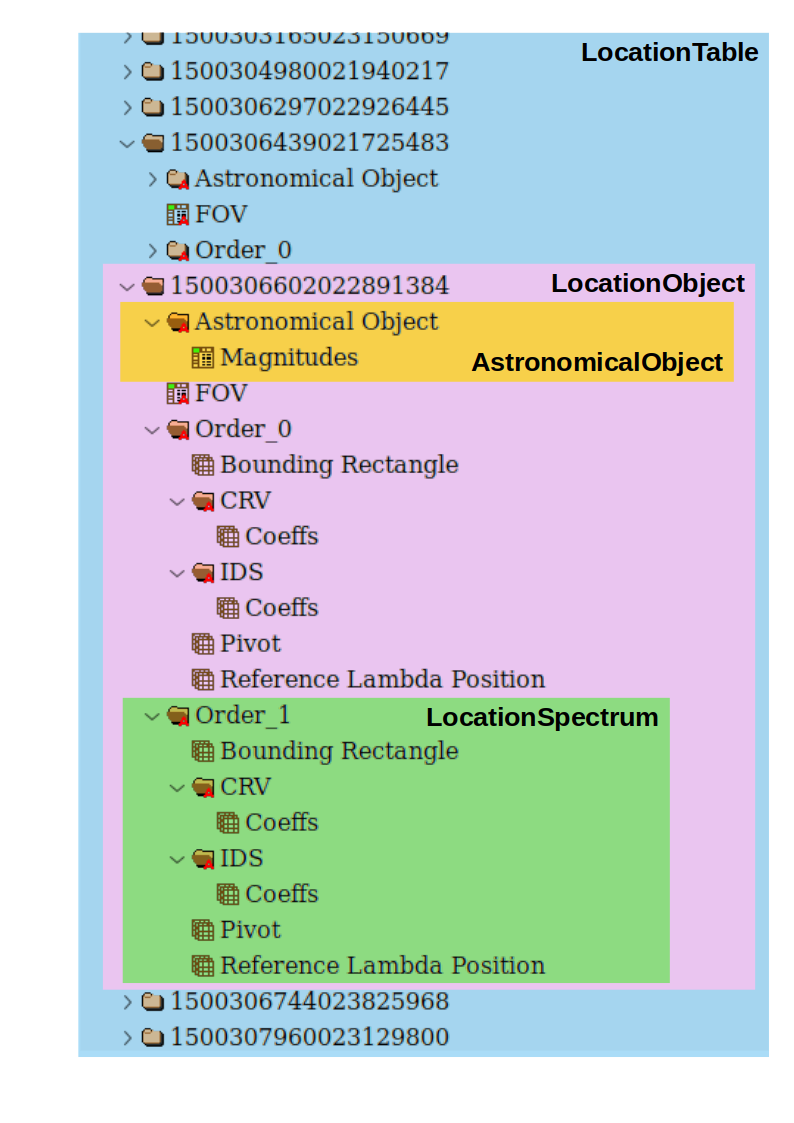
Fig. 40 : Location Table HDF5 file structure.
Location Spectrum group
Due to optical distortions and uncertainty in grism alignment, dispersed spectra are curved and not perfectly aligned with the dispersion direction. Since this curvature changes moving around the the FOV, each spectrum has it own curvature and it own inverse wavelength solution. These 2 properties are different spectrum by spectrum. For this reason the SIR_SpectraLocation Processing Element produces one LocationSpectrum (green box in Fig. 40) for each spectrum in the FOV.
The LocationSpectrum group contains information about geometry of the spectrum and it is used to locate spectral wavelengths on the detector. This is performed by:
The attribute Lambda Reference Value which contains the reference lambda value as defined by the Optical Model Product
The positions on the detector of this lambda reference value along the cross-dispersion direction defined by the Reference lambda dataset. This dataset is a (n,2) matrix, each row defines the pixel where the reference lambda is. Number of rows changes on an object bases according with object size and angle.
The local coefficients of the Curvature Model Product and of the Inverse Dispersion Solution Product for the current spectrum related to the central row of the spectrum.
(The paragraph Usage example explains how to combine these quantities).
Finally the LocationSpectrum contains attributes used to uniquely identify the spectrum:
the Detector ID;
the Dither;
the Extra Tilt wrt nominal grism tilt value applied to the spectrum (not implemented yet);
the Field ID (no more used);
the GWA Position, the position of the grism wheel;
the GWA Tilt: the grism wheel tilt (0, +4, -4);
the target ID as defined by the MER catalog;
the Observation ID;
the Order of the spectrum itself;
the Pointing ID.
Note: the Pivot dataset can be ignored, because it is related the extra tilt computation not implemented yet
Astronomical Object group
The AstronomicalObject (yellow box in Fig. 40) gathers the astronomical properties of the target; it’s attributes are:
Angle of the object in the sky;
Dec and RA coordinates;
the MER ID:
MER Tile where this object is;
object Type: star (1) or galaxy (2) (it is used by SIR Pipeline, because stars play a special rule in pointing adjustment and DQC computation).
Beside these values the AstronomicalObject also contains infrared magnitudes of the objects. The Magnitudes compound datatype table has 4 columns:
the magnitude Band;
Vega flag: 1 if the magnitude is in the Vega system, 0 if not;
the magnitude Value;
the magnitude Error.
Magnitude available could be:
J: from FLUX_J_TEMPLFIT column of DpdMerFinalCatalog;
Y: from FLUX_J_TEMPLFIT column of DpdMerFinalCatalog;
H: from FLUX_J_TEMPLFIT column of DpdMerFinalCatalog;
J2M: from J_M column of DpdExtTwoMassCutout;
Y2M: from H_M column of DpdExtTwoMassCutout;
H2M: from K_M column of DpdExtTwoMassCutout.
Location Object group
The LocationObject (purple box in Fig. 40) collects together spectra with the same target ID; it combines one AstronomicalObject and multiple LocationSpectra.
Location Table group
The LocationTable (cyan box in Fig. 40) data product gathers LocationObjects by ID.
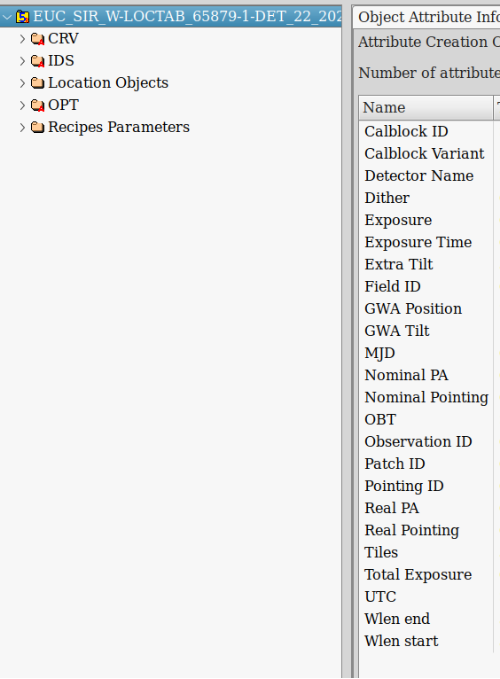
Fig. 41 : Additional info contained in the Location Table.
At the same level of the LocationObjects groups there are:
Other groups internally used by the SIR_Pipelines:
OPT the Optical Model Product content;
CRV the Curvature Model Product content;
IDS the Inverse Dispersion Solution Product content;
Recipes Parameters the input parameters used by the Processing Element which creates the LocationTable.
Attributes about the pointing, as they come from the input LE1 frame:
Calblock ID
Calblock Variant
Dither
Exposure
Exposure Time
Field ID
GWA Position
GWA Tilt
Nominal PA
Nominal Pointing
Observation ID
Patch ID
Pointing ID
Total Exposure
MJD
OBT
UTC
Attributes related to the LocationTable itself:
Detector Name;
Extra Tilt: the extra tilt computed by the Location Processing Element wrt GWA Tilt (not implemented yet);
Real Pointing and Real PA: the adjusted pointing computed by the Location;
Tiles: the MER tiles intersected by the this LocationTable product;
Wlen start and Wlen end: the starting and ending wavelengths used to compute the spectra trace extension.
DataContainer file name description
The following XML keywords:
Data.ObservationSequence.ObservationId (OBSID)
Data.ObservationSequence.DitherObservation (DITH)
Data.DetectorId (DETID)
are combined to create the DataContainer file name:
EUC_SIR_W-LOCTAB_<OBSID>-<DITH>-DET_<DETID>_<TIMESTAMP>.h5
Here below and example:
EUC_SIR_W-LOCTAB_65879-2-DET_31_20250410T104407.526723Z.h5